
20 November 2026 | Nagarjuna Training Institute, Nagaloka, Nagpur
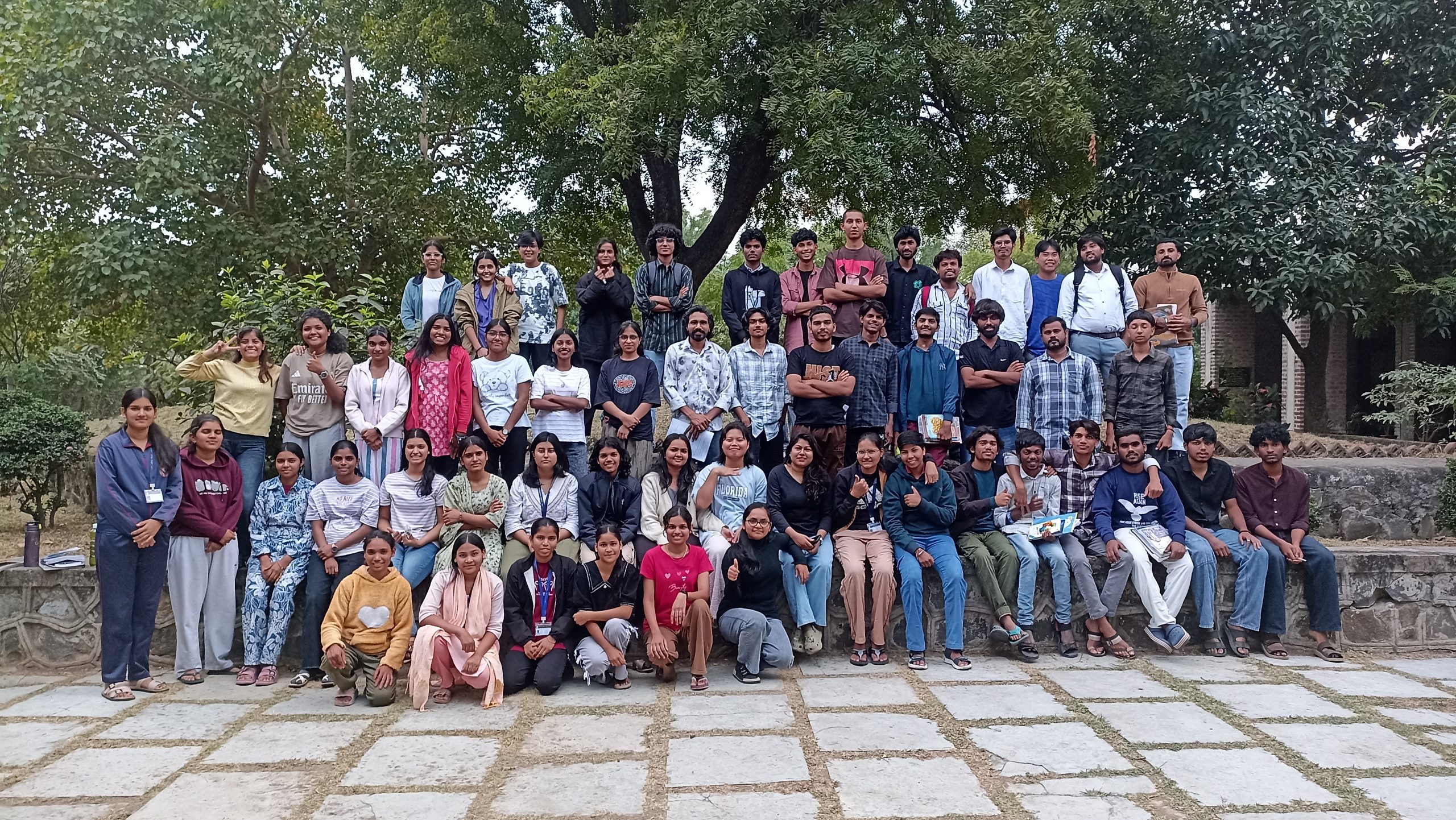
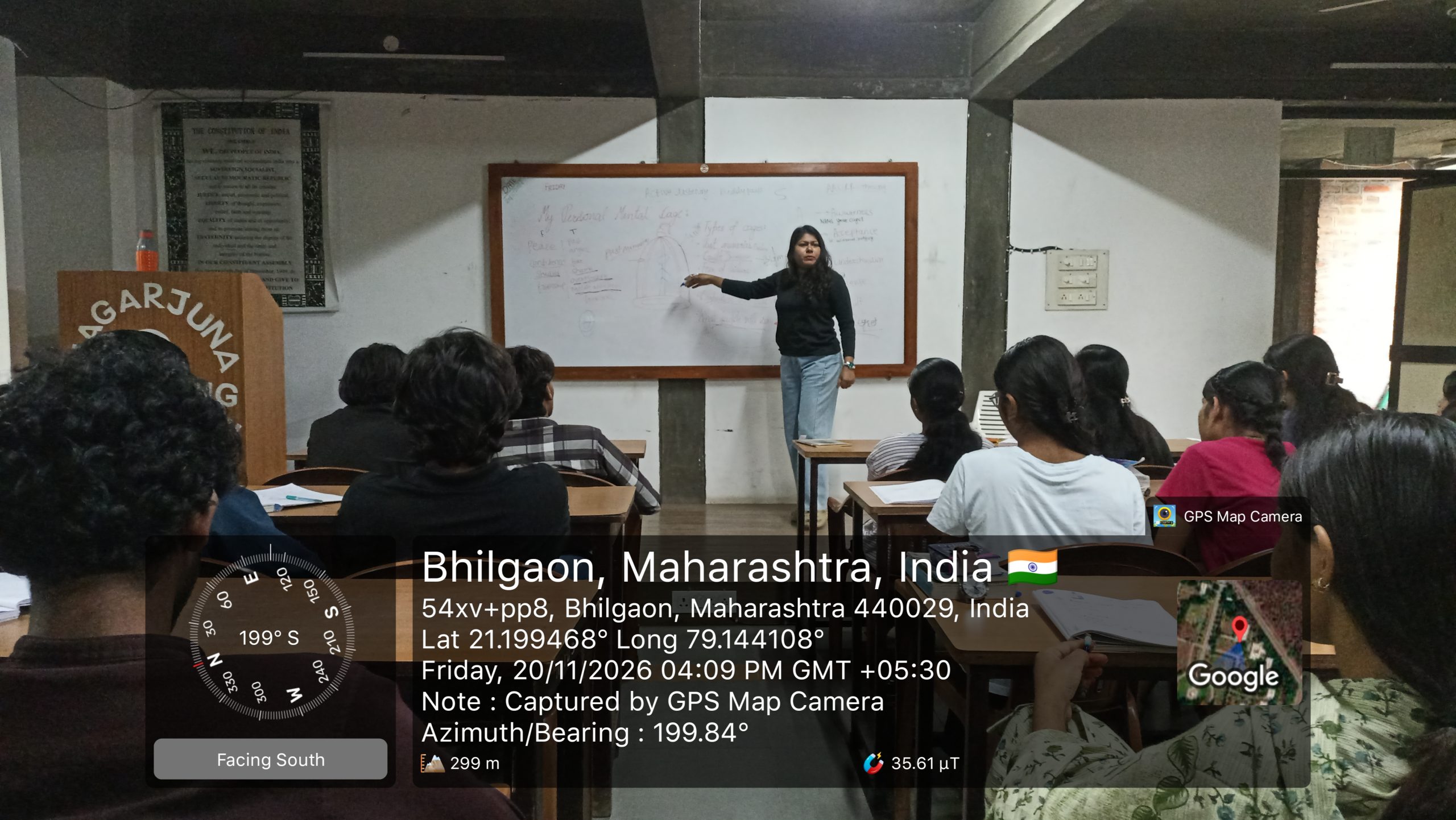
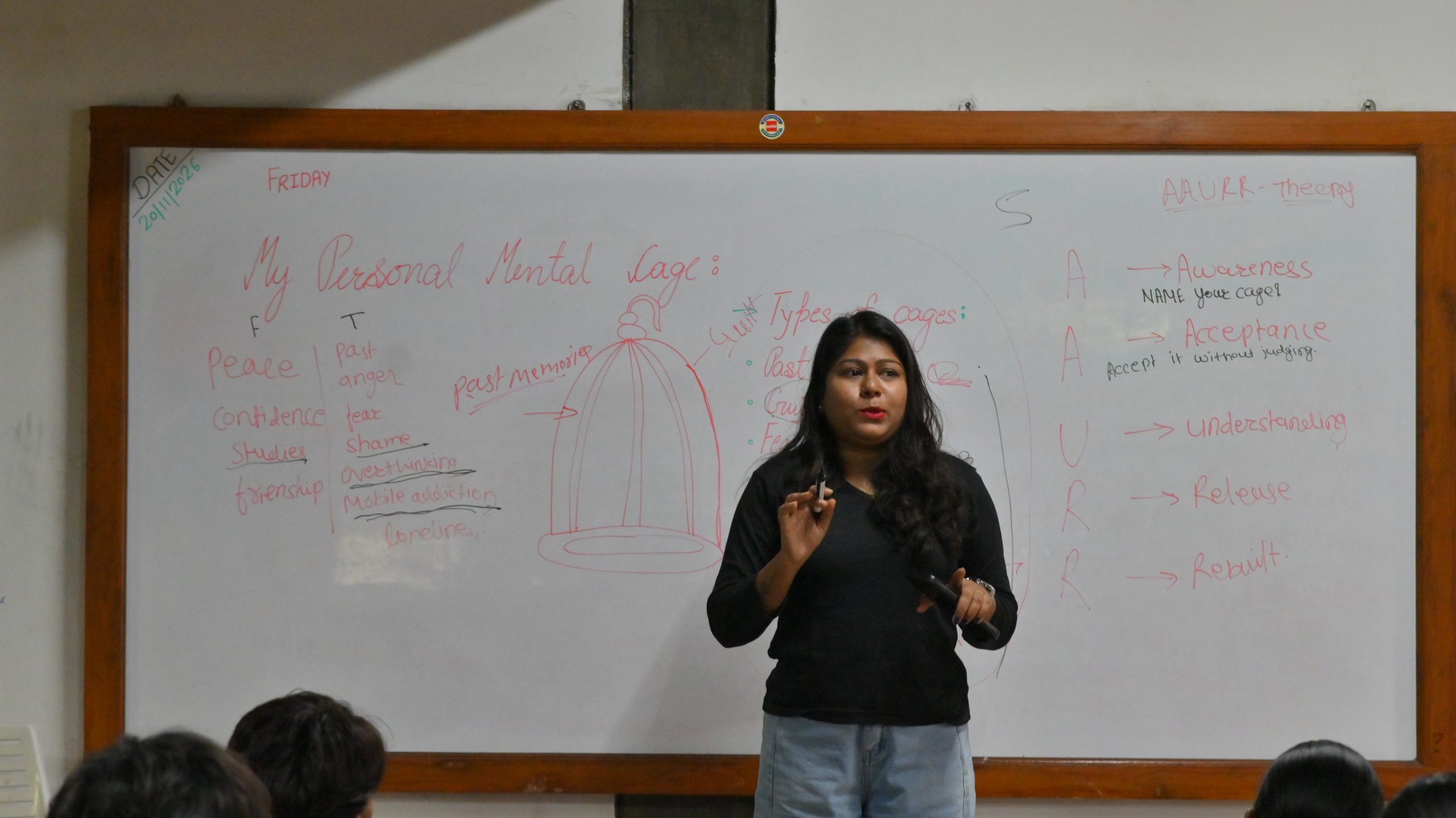
Nagarjuna Training Institute (NTI) organized a group counselling session titled “My Personal Mental Cage” on 20 November 2026 for its students. The session aimed to encourage students to understand their emotional challenges, recognize negative thought patterns, develop self-awareness, and build confidence in addressing personal and academic difficulties.
The session was conducted by Mrs. Ruzail , MSW Counselling Trainee, Indira Gandhi National Open University (IGNOU). It introduced students to the idea that personal challenges are not always caused by external circumstances; sometimes, fear, past experiences, overthinking, guilt, and comparison can influence how individuals perceive themselves and their situations.
AAURR Framework: Understanding and Overcoming Personal Barriers
The central approach of the session was based on the AAURR framework, consisting of five steps:
- Acknowledge: Recognizing personal challenges, fears, and negative thought patterns.
- Accept: Accepting one’s feelings and experiences without self-blame or judgement.
- Understand: Exploring the reasons and experiences behind personal difficulties.
- Release: Learning to gradually let go of unhelpful thoughts and emotional burdens.
- Rebuild: Taking small, positive steps towards confidence, personal growth, and a healthier outlook.
Through guided imagination and interactive exercises, students were encouraged to reflect on their personal experiences and identify the mental barriers that sometimes affect their confidence, relationships, and academic progress.
Activities and Group Exercises
The session included several participatory activities designed to encourage reflection, communication, and mutual support.
1. Draw Your Cage
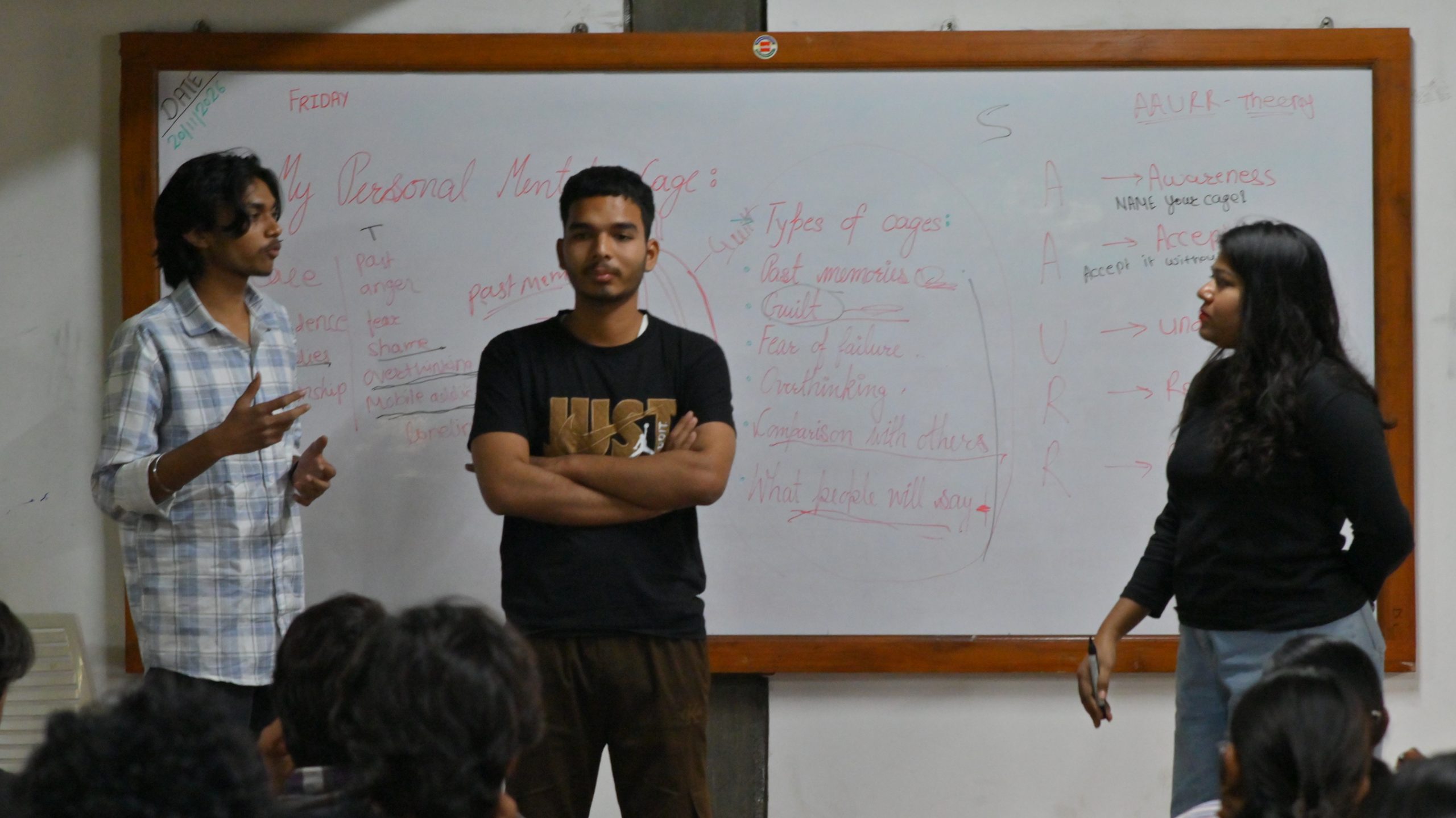
Students were asked to draw an imaginary cage representing their personal challenges. They identified the different barriers affecting them, such as fear, past experiences, overthinking, loneliness, and comparison with others.
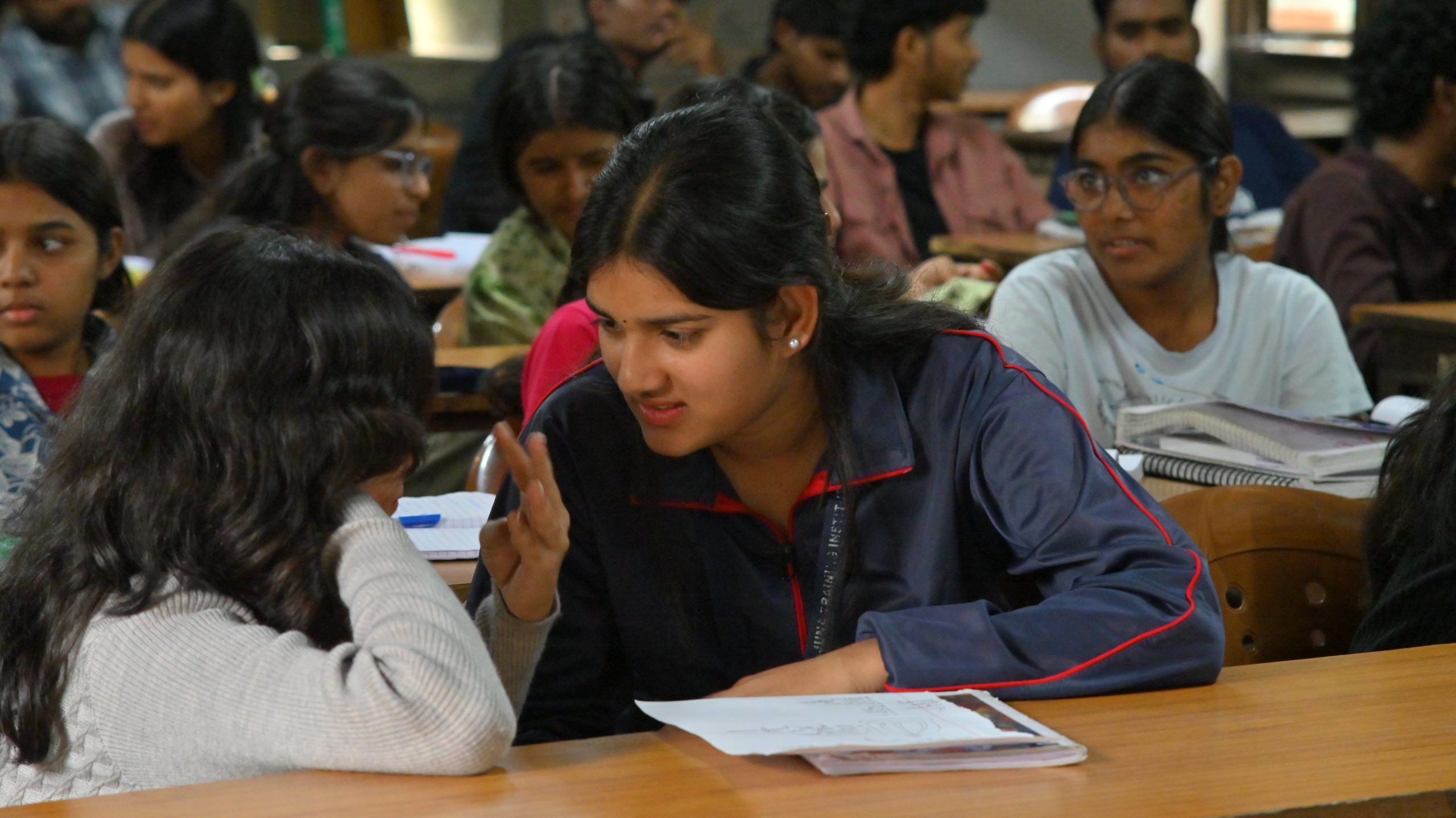
2. Buddy Pair Discussion
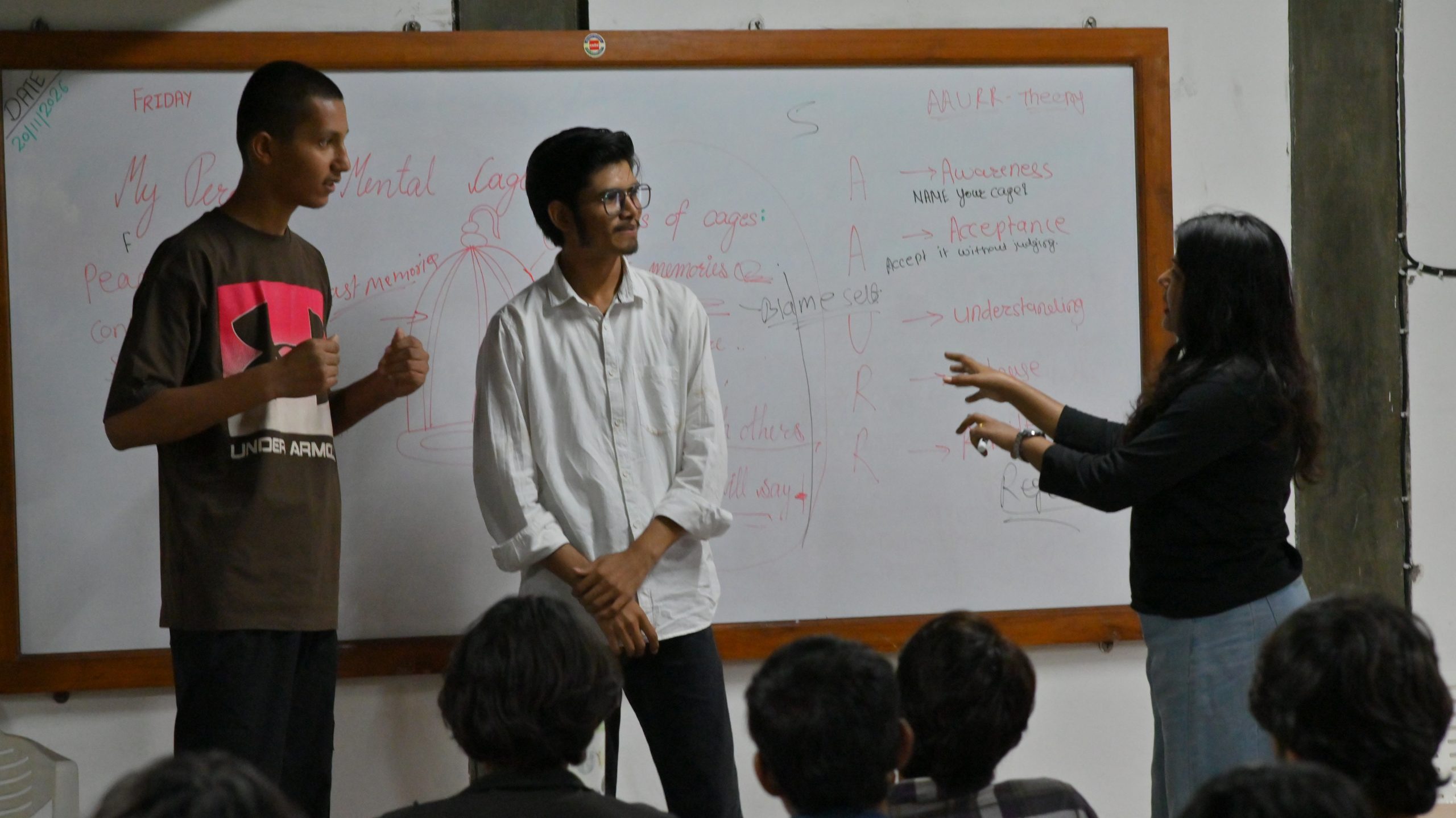
Students worked in pairs and shared their personal challenges with one another. The listening partner was encouraged to listen attentively without offering advice or making judgements. This activity highlighted the importance of empathy, understanding, and supportive communication.
3. Group Sharing
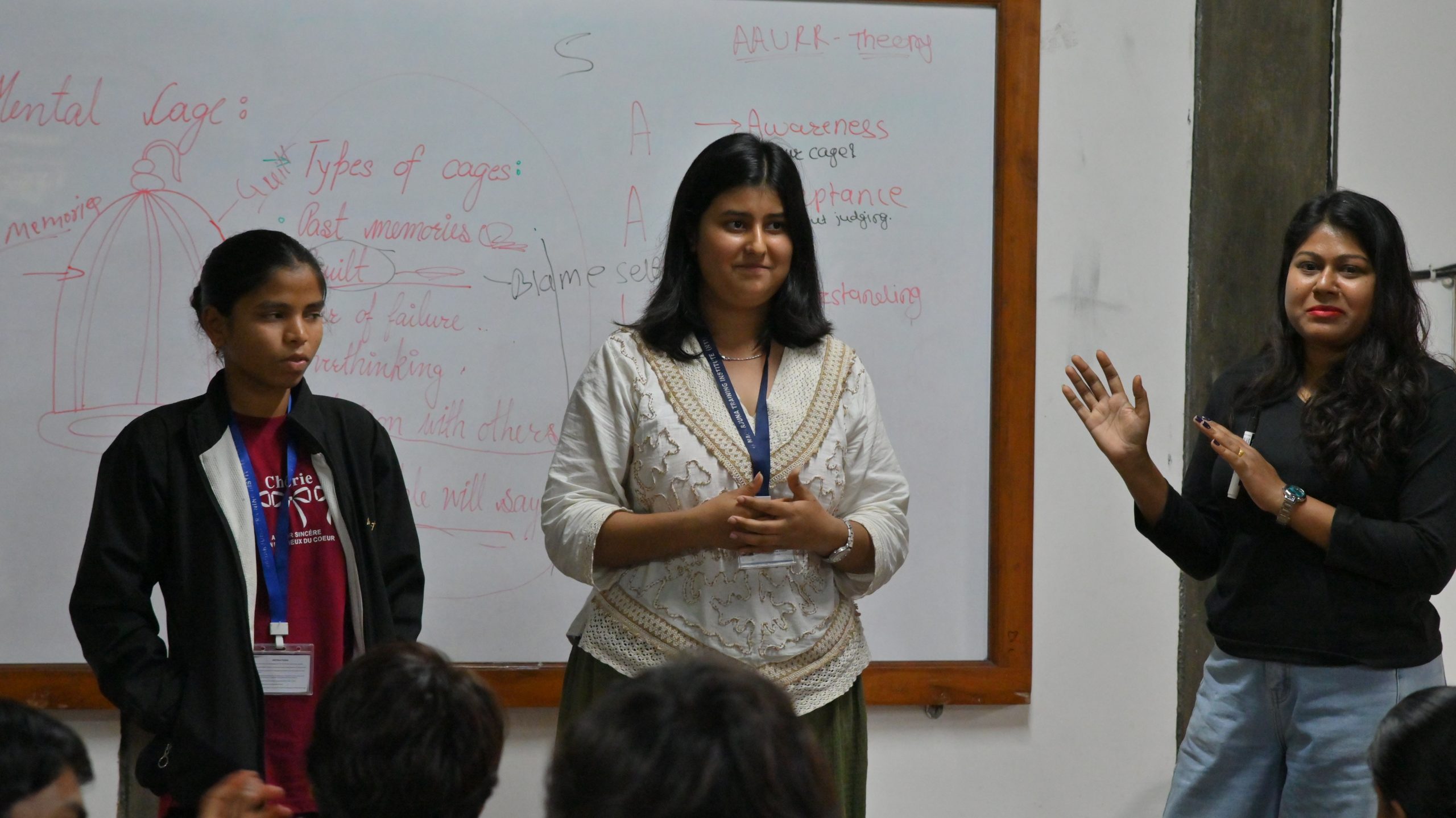
Students who felt comfortable were invited to share their experiences with the larger group. Some of the common concerns discussed included hesitation in speaking English, homesickness, overthinking, and the impact of past failures. The group provided a respectful and supportive environment for listening and sharing.
4. Letter-Writing and Reflection Activity
Students wrote symbolic letters addressing their personal challenges, using expressions such as “Dear Fear,” “Dear Past,” and “Dear Overthinking.” They then tore the pages as a symbolic exercise representing their willingness to move forward and gradually release unhelpful thoughts.
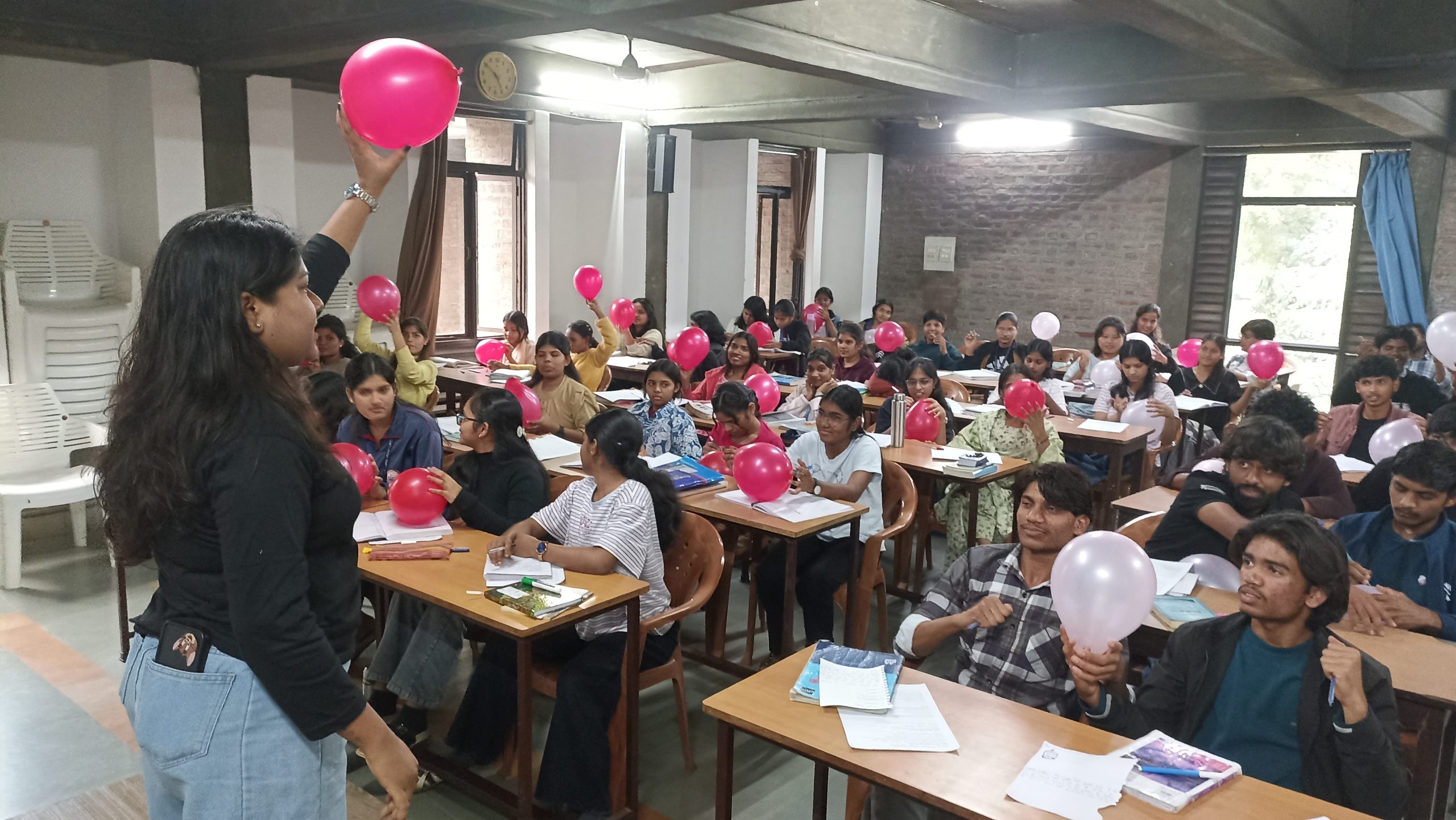
5. Balloon Visualisation Activity
Through a guided visualisation exercise, students imagined placing their negative thoughts inside a balloon and releasing it into the sky. The activity encouraged them to reflect on letting go of emotional burdens and creating space for positive thinking.
6. Student Background and Support Assessment
Towards the end of the session, students completed a confidential background information form. It covered aspects of their personal background, adjustment to the learning environment, academic experiences, hostel life, future plans, and areas where they might require additional support. This information will help the institution better understand students’ needs and identify opportunities for appropriate individual guidance.
Key Observations and Outcomes
The group activities helped students recognize that many of the challenges they experience are also shared by their peers. Fear and overthinking emerged as common concerns during the discussions.
The session contributed to:
- Greater awareness of personal emotions and thought patterns.
- Improved confidence in expressing personal concerns.
- Development of empathy and active listening among students.
- Encouragement of peer support and mutual understanding.
- Recognition of students who may benefit from additional individual guidance.
- Identification of areas where further student support and counselling may be helpful.
The activities also encouraged students to approach their difficulties with patience and take small, practical steps towards personal development.
Conclusion
The group counselling session provided students with an opportunity to reflect on their personal experiences in a supportive group environment. Through the AAURR framework and participatory activities, they explored ways to recognize emotional challenges, develop positive thinking, strengthen confidence, and support one another.
The programme reinforced Nagarjuna Training Institute’s commitment to student welfare, emotional awareness, personal development, and creating a supportive learning environment where students can grow academically and personally.
“Your cage is in your mind. Your key is also in your mind. Open it slowly, step by step. You are not alone.”
Facilitator: Mrs. Ruzail Sikandar Gondane
MSW Counselling Trainee, IGNOU


